
Saved Visa Cards vs. One-Time Entry
 Available in US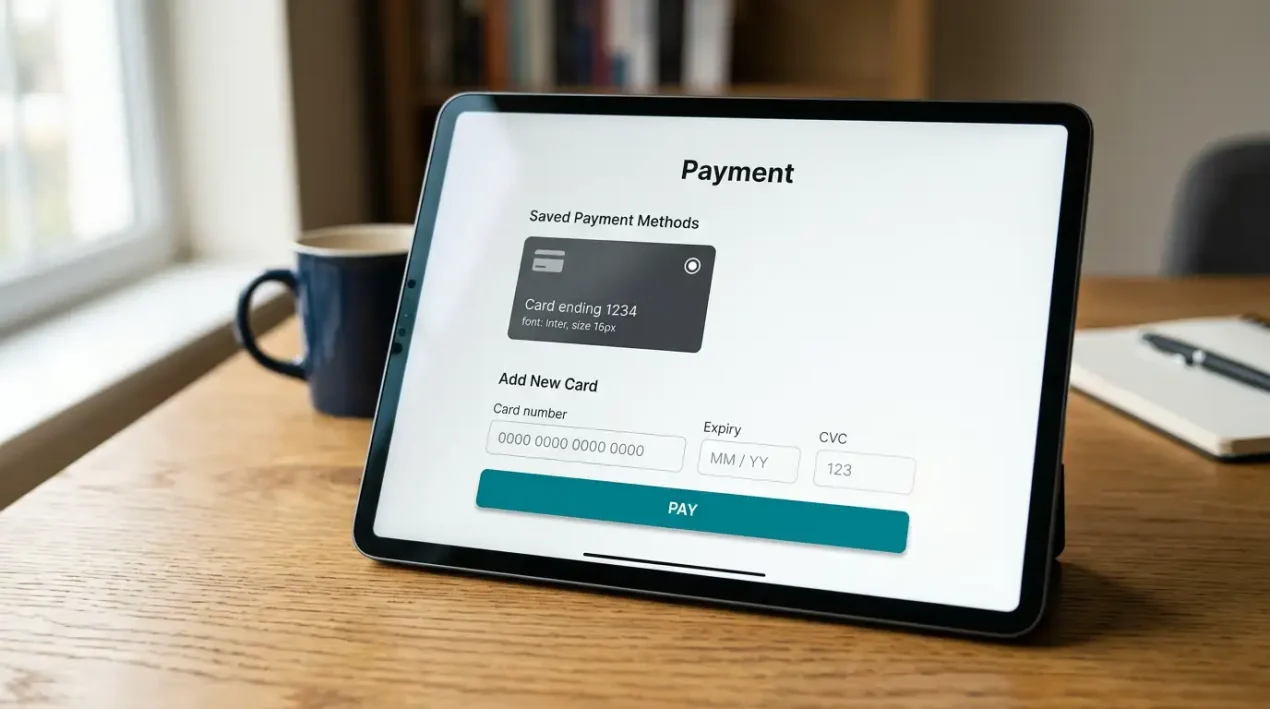
The convenience that comes with a small security trade-off
I made the decision to stop saving Visa cards at bookmakers about two years ago, then reversed it last winter when I found myself losing thirty seconds at every deposit re-entering card details on a phone keyboard. The trade-off matters more than people realise – saved cards make the deposit experience genuinely smooth, but they introduce specific risk modes that one-time entry doesn’t have. The right answer depends on how you bet, where you bet, and how disciplined you are about device security.
What surprised me when I dug into the actual mechanics is that saved-card and one-time entry aren’t equivalent at the regulatory or compliance levels either. A saved card uses a tokenisation framework that the operator has specific obligations around – storage, encryption, periodic re-verification – and those obligations shape the customer experience in ways that aren’t visible at the deposit screen. So the choice is less “convenience versus security” and more “two slightly different products with different trade-offs”.
This piece walks through what saving a Visa card at an Australian bookmaker actually means, what the tokenisation does, when one-time entry is the better choice, and how the security profile differs between the two.
Convenient betting starts on our website.
What tokenisation actually does at the operator
When you save a Visa Debit card at a bookmaker, the operator doesn’t actually keep your card number. PCI DSS compliance – the Payment Card Industry Data Security Standard – prohibits merchants from storing the full PAN unless they have a very specific kind of high-security infrastructure, and almost no bookmaker maintains that level of certification. Instead, the operator stores a token issued by their payment processor, which maps to your real card number on the processor’s side.
The token is essentially a stand-in for the card. When you deposit using the saved card, the bookmaker sends the token to the processor along with the transaction details, the processor swaps the token back to the real card number, and the transaction proceeds through Visa’s network as normal. From the customer’s perspective the experience is “one click and done”; from the data-flow perspective the underlying card number never sits in the bookmaker’s database.
The tokenisation framework is robust. Visa has been operating tokenisation services at scale for over a decade, and the infrastructure is part of why Visa remains the dominant scheme – over 3.3 billion cards globally in 2026, around 52.8% of all banking cards. The token-versus-PAN architecture is what makes saved cards genuinely safe at scale, not just convenient.
The 3D Secure interaction with saved cards
The biggest practical difference between saved and one-time card use shows up in the 3D Secure flow. A first-time card entry is treated as a fresh transaction by the issuer’s risk engine, with no prior history to compare against, and almost always triggers the SCA challenge – an SMS OTP, an in-app push, or biometric confirmation. A saved card used at the same bookmaker the next day can be processed as a merchant-initiated transaction (MIT) if the operator has registered the relationship with the issuer, which lets the issuer’s risk engine treat the transaction as a known relationship and skip the challenge.
This is where the operator’s implementation matters. Some Australian bookmakers handle the MIT framework correctly – the first deposit triggers SCA, subsequent deposits clear without challenges, and the customer gets a smooth experience. Others don’t, either because their payment platform doesn’t support MIT or because they haven’t configured the registration step. Customers using saved cards at these operators get a fresh SCA challenge on every deposit, which defeats much of the convenience benefit.
Smartphone penetration in Australia sits at 96% for adults aged 18 to 64, which is the demographic underpinning the entire SCA architecture. The flow assumes the cardholder has a device that can receive an SMS or run a banking app, and on that assumption the issuer can challenge frequently without breaking the customer experience. Saved cards work within this architecture by reducing the challenge frequency, not by eliminating it entirely.
One-time entry – when it makes sense
One-time entry has three real advantages. The first is privacy from your own household. If you share a phone or laptop with a partner, kids, or roommates, a saved card is a vulnerability – anyone who can unlock the device can deposit. One-time entry forces the card details to be re-entered each session, which functions as a primitive but effective second factor.
The second is operator-relationship hygiene. If you bet at multiple operators and you don’t fully trust each one, saving cards at all of them puts your tokenisation footprint across multiple databases. A breach at any of those operators puts your card token at risk of being used fraudulently in subsequent attacks, even though the token itself isn’t the card number. One-time entry keeps your card details only at operators where you’ve made the explicit decision to commit.
The third is forced friction. If your gambling has the kind of impulse-control profile where one-tap deposits are dangerous, one-time entry adds 30 to 60 seconds of deliberate effort to each deposit. That friction can be the difference between a thoughtful bet and an impulsive one. This isn’t a regulatory framework – it’s just a personal-discipline tool that the rail naturally provides.
The compliance picture matters here. ACMA’s 2024-25 work – ten new investigations opened, ten closed, including the AU$1 million Betchoice fine plus a mandatory two-year independent review – has reinforced operators’ obligations around responsible-gambling friction. Operators don’t want to make deposits too frictionless because regulators are watching, but they also want the convenience that saved cards provide. The balance has shifted slightly toward more friction over the past two years.
Saved card – when it makes sense
Saved cards make sense when three conditions hold: you trust the device you’re using, you trust the operator’s security infrastructure, and you bet frequently enough that the friction of one-time entry adds up. For a punter making three deposits a week at the same major operator, saving the card removes about 90 seconds per week of repetitive typing – small individually, meaningful over a year.
The other case is during live events. If you’re depositing during a soccer match or a horse race, the seconds saved by a one-tap deposit can be the difference between getting on a market and watching it close. One-time entry doesn’t realistically work for high-frequency in-play betting.
The security trade-off is manageable for most punters. The token stored at the operator isn’t useful to a thief who breaches the operator – they’d need to use the token through the operator’s payment flow, which would route the transaction back to the operator and trigger the operator’s own anti-fraud monitoring. The realistic threat model isn’t “operator gets breached and my card is now in the wild”; it’s “someone else uses my unlocked device to deposit at the operator I’m logged into”.
The 29 September 2024 pre-creation verification rules add another layer of protection. Even if someone unauthorised could trigger a deposit on your saved card, the operator’s verified-identity framework means they couldn’t easily withdraw the funds to a different account, because the withdrawal-side checks would catch the third-party attempt. The exposure is limited to the deposit being made and lost – bad, but contained.
How operators implement saved-card management
The operator-side implementation of saved cards has gotten more sophisticated over the past few years. Most major Australian licensees now offer card-management screens where you can see all the cards you’ve saved, when you last used each, and which one is set as the default. Removing a saved card is a one-click action at most operators, though some still require a support ticket for the explicit deletion.
The card-payment value in Australia hit AU$1.1 trillion in 2025, and Visa is the dominant scheme – so operators have plenty of incentive to invest in card-management infrastructure that keeps customers happy. The investment shows in the experience: clean card-listing UI, clear default selection, easy removal flows.
The customer-side hygiene that matters is reviewing your saved cards periodically. If a card has expired, the saved entry is dead – useful only as a reminder of which operator has your data. If you’ve stopped using an operator, removing your saved cards from their system reduces your exposure even if you never come back. Most punters never review their saved-card lists, which is a missed opportunity for tidy security housekeeping.
The rail decision in 2026
For punters who deposit infrequently, one-time entry is the cleaner default. The friction is manageable, the security profile is tighter, and you’re not maintaining tokenised relationships at operators you might not return to. For punters who deposit frequently at trusted operators, saved cards are the right choice. The convenience compounds across many deposits, and the security profile is acceptable as long as your device is locked.
Learn about Visa horse racing betting specifically.
The middle case – punters who use a few operators regularly but want to keep the relationship explicit – is where I land most often. Save cards at the operators you genuinely use; remove them when you stop. Keep the security posture deliberate rather than passive.
For the deeper picture of how 3D Secure specifically interacts with saved cards and merchant-initiated transactions, my piece on 3D Secure and SCA on Australian Visa betting deposits covers the authentication mechanics in detail.
Is saving a card at a bookmaker secure?
The infrastructure itself is robust – operators store tokenised references rather than full card numbers, and the tokens are useful only through the operator’s own payment flow. The realistic threat is unauthorised use of your unlocked device by someone in your household, not an operator-side breach exposing your card details. If your device security is good (lock screen, trusted users), saved cards are acceptably safe.
Why do some bookmakers still ask for full card details on every deposit?
Either the operator hasn’t implemented merchant-initiated transactions correctly, or they’ve set their compliance threshold lower than other operators and choose to re-authenticate every deposit. Both produce the same customer experience – the convenience benefit of saving a card is undermined. If this is happening at every deposit, the operator’s saved-card flow isn’t really doing its job.
Can I delete my saved card from a bookmaker after I stop using them?
Yes, and you should. Most operators offer a card-management screen where you can remove saved cards in one click. A few require you to contact support, which is a 5 to 10 minute task. Either way, removing saved cards from operators you’ve stopped using reduces your tokenisation footprint and tidies up your security posture.
