
Visa Betting Activity and the ATO
 Available in US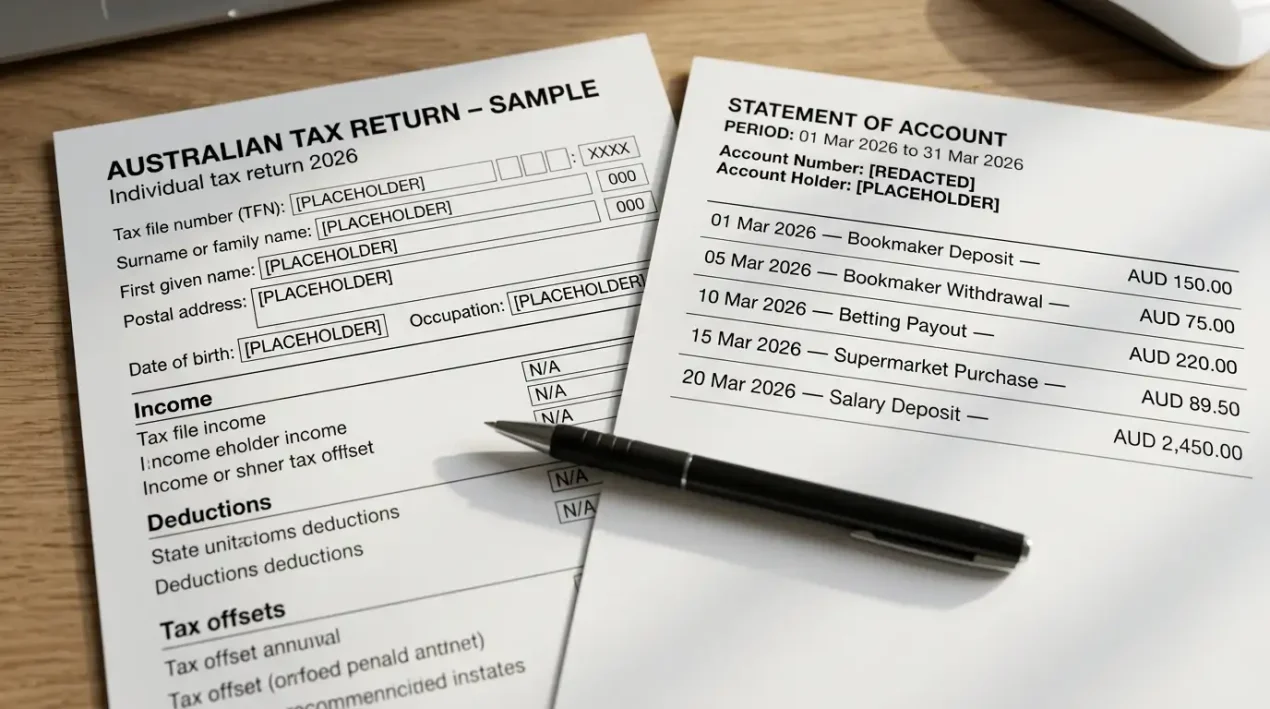
The conversation that nobody starts until it’s too late
The first time someone asked me whether their bookmaker winnings were taxable in Australia, I gave the answer everyone expects: no, not for a recreational punter. The second time, I gave the same answer. By the tenth or twelfth time, I’d realised the question wasn’t really about the law – it was about specific situations where the punter had lost the recreational-bettor protection without knowing it. So this piece is the version of the conversation I should have started giving six years ago, framed for Australian Visa users in 2026.
The tax treatment of gambling winnings in Australia is one of those topics where the headline answer is straightforward but the edge cases are messy. Recreational gambling income is not assessable as personal income for most Australians, and recreational gambling losses are not deductible. That’s the foundation. The complexity sits in the question of whether your activity actually counts as recreational, and that determination has nothing to do with whether you used a Visa card, a PayID transfer, or any other rail.
What this piece does is walk through the actual ATO framework, where the threshold between recreational and business sits, and how Visa transaction histories specifically interact with the tax conversation when it does come up.
Understand the law on our portal.
Recreational versus business – the distinction the ATO uses
The starting point in Australian tax law is that recreational gambling is not a taxable activity. Winnings aren’t assessable income, losses aren’t deductible, and the ATO doesn’t care how much money you’ve moved through your bookmaker accounts in any given year. This is a settled position that’s been consistent for decades, and it isn’t changing in 2026.
The exception is when gambling activity rises to the level of a business. The ATO uses a multi-factor test to make that determination, looking at things like the systematic application of skill, the maintenance of detailed records, the time committed to the activity, the scale of the betting, the existence of a business plan, and the reliance on gambling as a primary source of income. No single factor is decisive – the ATO weighs the cluster.
For most Australian punters, none of these factors apply. They bet for entertainment, they don’t keep systematic records beyond what their bank shows them, they spend evenings and weekends rather than full working days, and they have other sources of income. The recreational classification holds, and tax doesn’t enter the conversation. Australians lost an estimated AU$31.5 billion across the 2022-23 financial year on gambling overall, and the overwhelming majority of that activity sits comfortably on the recreational side of the line.
Where Visa transaction history fits into the picture
Your bank’s records of Visa transactions to and from bookmakers are the cleanest paper trail of your gambling activity. If the ATO ever asks about the activity – which they rarely do for recreational punters – your Visa Debit transaction history is what you’ll be looking at. Card-payment value in Australia reached AU$1.1 trillion in 2025, with Visa as the dominant scheme over 52.8% of all banking cards globally, and the industrial-scale data infrastructure means transaction histories are available, complete, and time-stamped.
What that history actually shows is deposits to bookmakers (debits from your account) and withdrawals from bookmakers (credits to your account). It doesn’t show what you wagered on, what odds you got, what you won versus lost on any individual bet, or whether any specific deposit was a fresh deposit or a redeposit of recently withdrawn funds. The bookmaker has all that detail; your bank only sees the gross flows.
For a recreational punter, the gross flow tells you what you’ve spent net of withdrawals – that is, your year’s gambling cost. For a business-classified punter, the gross flow is just the starting point; the real assessment requires the bookmaker’s transaction history showing every wager, every settlement, and every promotional credit. The ATO’s level of interest depends on which side of the line you’re on.
The factors that push activity toward the business side
The most useful framing of the recreational-versus-business test isn’t legalistic but behavioural. If you wake up thinking about the day’s wagering, plan your time around it, maintain a spreadsheet of every bet placed and outcome achieved, withdraw winnings consistently to a bank account that funds your living costs, and don’t have other meaningful income, you’re on the business side regardless of what you tell yourself about it being a hobby. If you bet on weekends for entertainment, lose more than you win, never quite remember which races you backed last weekend, and hold a regular job that pays your bills, you’re on the recreational side regardless of how much you spent.
The volume of activity matters but isn’t decisive. A punter who places AU$100,000 of bets a year while running a profitable business in another sector and treating betting as evening entertainment is recreational. A punter who places AU$30,000 of bets a year as their primary activity, with detailed records and systematic betting strategies, may be a business.
The compliance picture in the broader gambling sector has been getting tighter. ACMA opened ten new investigations in 2024-25, closed ten, including the AU$1 million Betchoice fine plus a mandatory two-year independent review. The regulatory pressure is on operators, not directly on individual punters, but the increased information flow to AUSTRAC and other agencies means that high-volume punters are more visible to the system than they used to be. Visibility doesn’t equal taxation, but it does mean that someone whose betting genuinely is a business will be harder to keep informal indefinitely.
Record-keeping that actually helps
For recreational punters, formal record-keeping is unnecessary. Your bank statements are the record, and they’re sufficient if anyone ever asks. There’s nothing to file, nothing to declare, and nothing to deduct. The only reason to keep your own records is for personal tracking – knowing how much you’ve actually spent on betting versus how much you think you’ve spent.
For punters who are heading toward the business classification, the record-keeping shifts from optional to essential. The minimum useful record is date, operator, bet description, stake, odds, outcome, settled amount, and any promotional value. A spreadsheet works fine. Many sophisticated punters use bet-tracking software that integrates with bookmaker accounts to capture this automatically.
The reason record-keeping matters at the business level is that your tax position depends on net winnings and losses, both of which need to be calculated with precision rather than estimated. Without records, the ATO will assess based on bank flows, which usually understates losses (because intermediate withdrawals look like income even when they’re just float-management) and overstates winnings.
Bank statements, AUSTRAC, and what gets visible to the ATO
The ATO has data-matching agreements with various government agencies, including AUSTRAC, which gives them visibility into significant financial movements. The threshold reduction from AU$10,000 to AU$5,000 a day for wagering operators in 2026 means more transactions sit above the reporting threshold than before, which means more activity is in the systems the ATO can query if they choose to.
What this means in practice is that significant gambling activity – say, AU$50,000-plus of annual deposit volume across the Australian licensed sector – is more visible to the ATO in 2026 than it was in 2022. The visibility doesn’t trigger automatic taxation; it just means that if a flag fires elsewhere (your declared income doesn’t match your bank flows, your lifestyle suggests undeclared activity, you become a target for review for some other reason), the gambling activity is right there in the data.
For recreational punters this changes nothing operationally. For high-volume punters at or near the business classification, the increased visibility is a reason to be more careful about how the activity is structured and recorded. Talking to a tax professional who understands both gambling and small-business taxation is the right move at that level – not for any particular case, but because the framework is complex and the cost of getting it wrong is significant.
Where Visa-specific issues actually matter
For most tax conversations, the rail you used to deposit doesn’t matter. Visa, PayID, bank transfer – they all produce the same gross-flow data in your bank records, and the ATO doesn’t differentiate between them. The cardholder-name-match rules at bookmakers are a regulatory issue, not a tax one. The credit-card ban is a regulatory issue, not a tax one.
For more legal updates, see the legal notice section.
The one place Visa-specific data does matter is in disputed transactions and chargebacks. A successful chargeback against a bookmaker creates a complicated situation – was the original deposit really a deposit, or was it reversed? Was the activity gambling or fraud? If a chargeback resolves the question, the underlying transaction is treated as if it never happened. If a chargeback is filed but contested, there can be a period where the transaction’s classification is genuinely uncertain.
For the deeper picture of how chargebacks specifically work for Australian Visa betting transactions, my piece on Visa chargebacks for gambling transactions in Australia covers the dispute mechanics in detail.
Are recreational gambling winnings taxable in Australia in 2026?
No. Recreational gambling income is not assessable as personal income, and recreational gambling losses are not deductible. The ATO has held this position consistently and there’s no change planned for 2026. The exception is when activity rises to the level of a business, which is determined through a multi-factor test that considers systematic application, time commitment, record-keeping, scale, and reliance on gambling as primary income.
Does the ATO see my Visa bookmaker transactions automatically?
The ATO has data-matching agreements with AUSTRAC and other agencies, which gives them visibility into significant financial activity if they query the systems. They don’t routinely review individual bank transactions, but high-volume gambling activity that’s flagged for other reasons (lifestyle mismatches, declared-income discrepancies) can lead to a deeper look. The threshold reduction to AU$5,000 a day for wagering reporting in 2026 increases the visibility somewhat.
Should I keep records of my Visa betting deposits and withdrawals?
For recreational punters, no – your bank statements are sufficient. For punters whose activity is approaching the business classification, yes, with detailed bet-by-bet records including dates, stakes, odds, outcomes, and settled amounts. The threshold for needing detailed records is the same threshold for needing tax advice – when betting starts feeling like a primary activity rather than entertainment.
