
Foreign Visa Cards at Australian Bookmakers
 Available in US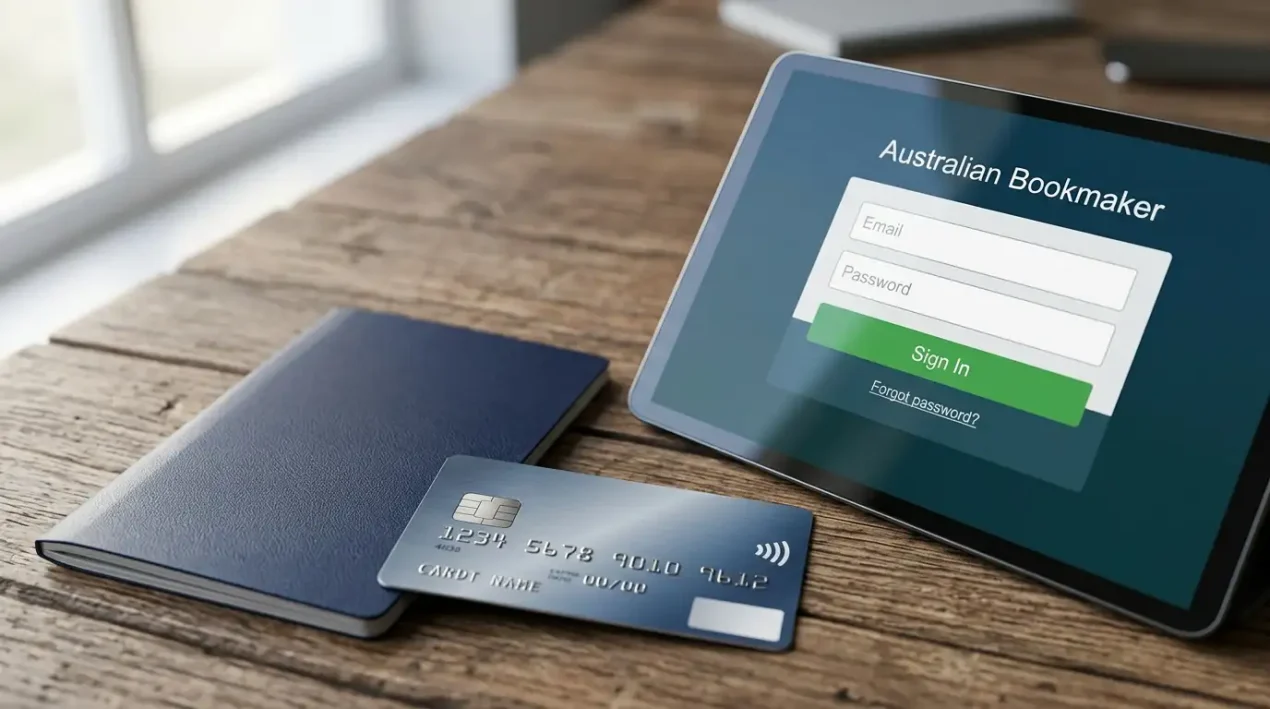
The cardholder who isn’t quite Australian
Australian bookmaker accounts are designed for Australian residents, but the cardholders who sit in front of them aren’t always neatly Australian. Backpackers on working holiday visas hold UK, Irish or German cards and want to bet on the Melbourne Cup. Expats living in Sydney for a year still have their home-country cards as primary payment methods. Returning Australians who lived abroad for years carry overseas cards alongside their newly reopened domestic ones. And visiting tourists who happen to be in Australia for a major sporting event sometimes try to deposit at a local operator using whatever card is in their wallet.
The acceptance pattern for foreign Visa cards at Australian bookmakers in 2026 is mixed and depends on a stack of factors – the customer’s residency status, the card’s issuing country, the operator’s risk policy, and whether the customer can complete the verification requirements. Some foreign cards work without issue. Others fail at the deposit attempt for reasons that aren’t always made clear. Understanding which side of that line a particular foreign card sits on requires walking through the underlying constraints.
This piece works through residency requirements, currency conversion realities, KYC implications and tax considerations for foreign-card use at Australian operators.
International card tips on our website.
Residency versus card-issuing country
Australian wagering operators are licensed to provide services to Australian residents. The licence isn’t conditional on the customer’s payment method being Australian – it’s conditional on the customer themselves being resident in Australia. A foreign Visa card held by an Australian-resident cardholder is, in principle, eligible. A foreign card held by a non-resident is structurally outside the operator’s licensed customer base.
This means the first question for any foreign-card situation isn’t about the card – it’s about the cardholder. Backpackers on working holiday visas are typically resident enough for tax and identity purposes that they qualify as customers, and operators that handle these cases carefully will accept their accounts and their foreign cards. Tourists on short visas who don’t establish Australian residency are not generally eligible to open accounts at all, regardless of what card they hold.
The 29 September 2024 pre-creation verification rules made this distinction sharper. Operators have to verify identity before account creation, and the documentation pack for non-residents is harder to assemble. A foreign passport with no Australian visa or address proof is rarely sufficient on its own; operators want to see something that anchors the customer to an Australian address. For backpackers and expats this is usually a tenancy agreement or a utility bill at an Australian address. For tourists with no address at all, it’s typically not possible.
Why foreign cards still get refused even when residency is fine
An Australian-resident cardholder with a foreign Visa Debit card sometimes still finds the card refused at deposit. The reasons fall into a few categories that are worth separating.
The first is fraud-pattern detection. Operators’ payment processors monitor deposit patterns, and a foreign-issued card on an Australian-IP customer is a pattern that historically correlates with elevated fraud risk. The processor might decline the transaction at the BIN level before the operator even sees it. This is more common with cards from regions that have higher fraud rates in the processor’s training data, and less common with cards from low-risk regions like Western Europe, Canada, or the UK.
The second is currency mismatch logic. Australian operators bill in AUD, and a foreign card has to either support multi-currency transactions or accept a currency conversion at the issuer. Most modern Visa Debit cards from major economies handle this without issue, but some cards from regions with capital controls or restricted-currency frameworks won’t process the AUD transaction at all. The decline shows up as a generic refusal rather than a currency-specific message.
The third is the credit-card detection logic that operators apply to comply with the IGA Amendment Act 2023 ban. Operators check the card’s funding indicator (debit, credit, or prepaid) and decline credit cards regardless of issuing country. This is the same logic applied to Australian cards, but it occasionally misclassifies foreign cards because the BIN database used for funding-indicator detection isn’t always up to date for non-Australian issuers. A genuine foreign Visa Debit card sometimes gets flagged as credit and refused.
Currency conversion costs nobody talks about upfront
When a foreign Visa card is used at an Australian operator, the transaction is denominated in AUD and the issuer applies a currency conversion to charge the cardholder in their card’s home currency. The conversion rate is set by the issuer (sometimes via Visa’s wholesale rate plus a margin, sometimes via the issuer’s own foreign-exchange desk), and the margin is typically two to three percent above the inter-bank rate.
For small deposits the margin is barely noticeable – a AU$50 deposit with a three percent FX margin costs an extra AU$1.50 in effective FX cost. For larger deposits the margin compounds. A AU$2,000 deposit incurs around AU$60 in FX cost, and frequent foreign-card depositors find themselves paying hundreds of dollars in cumulative FX over a year.
Some foreign-issued Visa Debit cards (particularly fintech cards from neobanks targeting travellers) use Visa’s wholesale rate without any margin, which makes them substantially cheaper for AUD deposits than legacy bank-issued cards. Backpackers and expats who plan to do any volume of Australian betting will want to know which of their cards uses which rate. The card’s terms-of-service usually specifies the FX policy, and the cardholder can verify by comparing a recent transaction’s settled amount to the wholesale rate on the day.
The KYC layer for foreign cardholders
Verification for foreign cardholders is harder than for domestic ones because the documentation pack is different. The standard Australian verification flow uses a driver’s licence or passport cross-referenced against a government identity database. Foreign passports are accepted, but the database cross-reference doesn’t work the same way, and operators usually require additional documentation to bridge the gap.
Typical additions are a recent utility bill or bank statement showing the cardholder’s name and an Australian address, a tenancy agreement, or in some cases a letter from an employer confirming Australian work status. Operators that have processed many backpacker accounts have streamlined this; smaller operators that handle foreign cardholders rarely sometimes take days to process the documentation because the support team has to escalate to a senior reviewer.
The AUSTRAC framework’s threshold drop to AU$5,000 a day in 2026 has made the source-of-funds layer more relevant for foreign cardholders. A backpacker depositing AU$3,000 from a UK card on a major race day might be asked for source-of-funds documentation – pay slips, bank statements showing the salary that funded the card balance – and the documentation has to be in English or accompanied by a translation. This is a friction point that domestic cardholders rarely encounter at the same deposit level.
Withdrawal back to a foreign card
Closed-loop withdrawals to foreign cards work in principle but in practice are sometimes refused. The operator’s compliance posture treats outbound payments to foreign cards as a slightly higher-risk category, and some operators apply additional verification before processing. Others simply refuse and route all foreign-card-funded winnings to bank transfer instead.
For cardholders with an Australian bank account, this is usually fine – the bank-transfer payout lands in the Australian account at no cost and can be moved internationally later if needed. For cardholders without an Australian bank account (tourists who managed to open accounts under earlier rules, very short-stay backpackers), the absence of a domestic landing point makes withdrawal harder. The funds sometimes end up sitting in the bookmaker’s wallet for months because there’s no clean payout path that the operator’s compliance system will approve.
The realistic guidance for foreign cardholders is to open an Australian bank account early in the stay if betting is going to be a regular activity. The account opens up PayID and bank-transfer rails for both deposits and withdrawals, simplifies the operator’s compliance picture, and avoids the foreign-card refusal patterns at the deposit step.
Tax and reporting implications
Australian tax treatment of gambling winnings for recreational punters is generally straightforward – winnings aren’t taxable income unless gambling is conducted as a business. This applies to foreign cardholders the same way it applies to domestic ones. A backpacker who wins AU$5,000 on the Melbourne Cup doesn’t owe Australian tax on the win, regardless of which card funded the deposit.
The complication is the cardholder’s home-country tax treatment. Some countries tax gambling winnings as ordinary income and require declaration of foreign-sourced gambling income. UK residents, Canadian residents and Irish residents generally don’t owe tax on gambling winnings either, so the cross-border picture is symmetric. Residents of countries with stricter gambling-income rules (some EU members, the US for non-residents) might have a home-country reporting obligation that the deposit on the Australian operator effectively documents. Operator records of deposits and withdrawals from a particular card are sometimes accessed by foreign tax authorities through cross-border data-sharing agreements.
The 96% smartphone penetration rate among Australian 18-to-64-year-olds (which extends to most short-stay residents through Australian SIMs) means foreign cardholders typically authenticate and verify through mobile apps the same way locals do. The verification path itself isn’t different by residency; only the supporting documentation is.
What operators are actually checking at the BIN level
When a foreign Visa card is used for a deposit attempt, the operator’s payment system does a BIN-level check before the transaction reaches the network. The check pulls the funding indicator (debit, credit, prepaid) and the issuer country from the BIN database, and applies the operator’s policy based on those values.
Foreign-issued debit cards from low-risk countries (UK, Ireland, Canada, New Zealand, most of Western Europe) generally pass the BIN check without any country-specific friction. Cards from countries the operator has flagged as high-risk in its policy might be blocked at this layer regardless of the cardholder’s residency. The flags are operator-specific and rarely published, so cardholders sometimes don’t know whether their country is flagged until they try a deposit and see the refusal.
Sportsbet, Ladbrokes and the other major operators typically maintain conservative BIN policies and refuse cards from regions outside their core markets. Smaller operators and newer entrants sometimes accept a wider range of foreign BINs because they’re competing for any verifiable customer they can get. The acceptance pattern for foreign cardholders therefore varies meaningfully across the 90-plus licensed operators in the Australian market, and a refusal at one operator doesn’t predict a refusal at another.
Practical advice for foreign cardholders
The clean path for any foreign cardholder who wants to bet at Australian operators is to establish residency documentation early, open an Australian bank account, and route the actual betting deposits through an Australian PayID or local Visa Debit rather than the foreign card. The foreign card stays in the wallet for general purchases; the betting account uses domestic rails. This avoids the BIN-level refusal patterns, simplifies the KYC layer, and makes withdrawals straightforward.
Ensure your details are correct to avoid a Visa name mismatch.
For cardholders who really want to use a foreign card, the operator selection matters. Picking an operator known to handle backpacker accounts well – typically the larger ones with developed compliance teams – improves the odds significantly compared to picking a smaller one whose foreign-card handling is rare and inconsistent. The cardholder should expect some friction at first deposit and have the documentation pack ready before the attempt.
For tourists on short visas who don’t qualify for accounts at all, the realistic answer is that Australian licensed operators aren’t the right venue. The IGA framework, the 220 unlicensed operators that have been pushed out of the market over the past eight years of enforcement, and the BetStop infrastructure all point toward licensed operators serving residents. Short-stay visitors who really want to bet during their trip face a structurally narrow set of options, and trying to force a foreign-card deposit through a licensed Australian operator usually isn’t one of them. For more on the same regulatory frame, the AUSTRAC AU$5,000 daily threshold analysis covers the adjacent ground.
I’m on a working holiday visa for a year. Can I open an Australian bookmaker account with my UK passport and rental address?
Yes, in most cases. Major operators handle working-holiday-visa accounts routinely if you have an Australian address (rental agreement, utility bill) and your passport with the visa stamp. The verification takes a bit longer than for citizens but works.
Will my UK Visa Debit card incur a foreign-transaction fee on Australian bookmaker deposits?
It depends on your card. Traditional UK bank Visa Debit cards usually charge an FX fee around 2-3 percent. Travel-focused fintech cards (Wise, Revolut, Monzo) typically use the wholesale rate with little or no margin.
Can a tourist on a 30-day visitor visa open an account at all?
Generally no. Operators require an Australian residential address that can be verified, and tourist accommodation usually doesn’t qualify. The 29 September 2024 pre-creation verification rules tightened this further.
