
Visa Refunds and Reversals at Bookmakers
 Available in US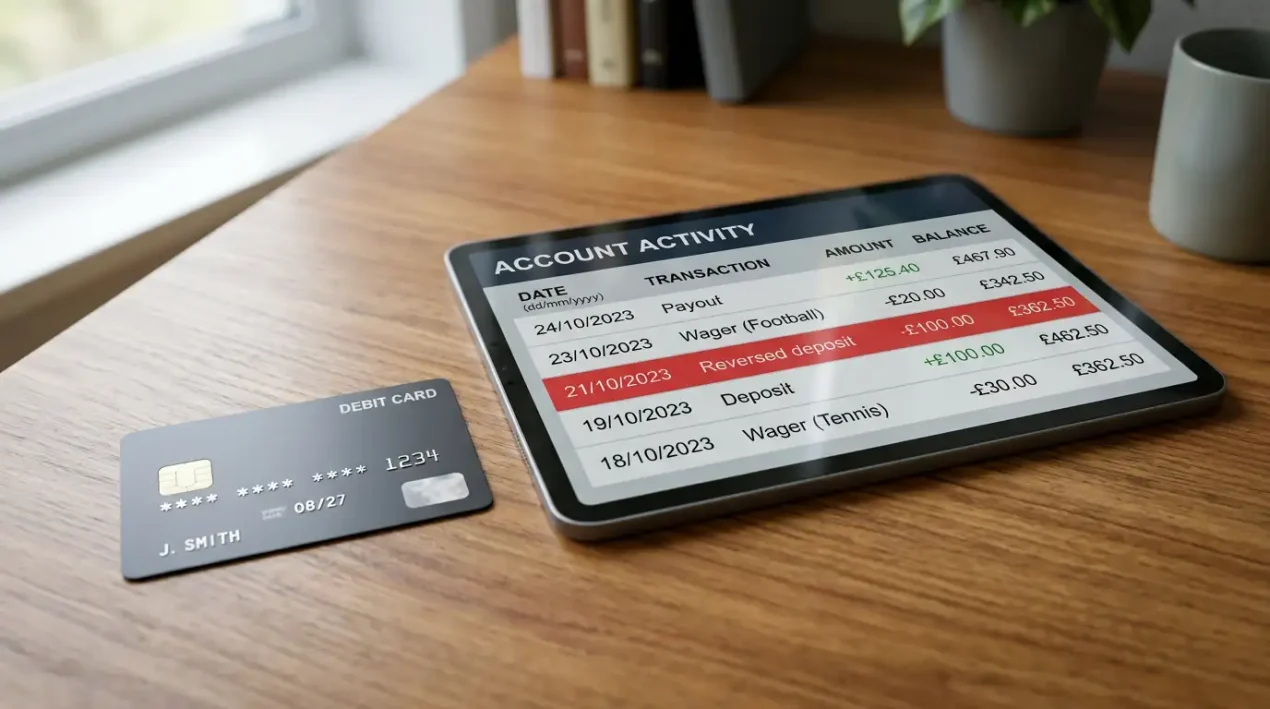
The deposit you made yesterday that’s gone today
One of the more confusing situations I see is when a punter deposits successfully, places bets, and then logs in the next day to find the deposit reversed and the bets either rolled back or sitting on a balance that doesn’t actually exist anymore. The terminology operators use for these events varies – “reversed”, “voided”, “refunded”, “cancelled” – and the technical mechanics behind each term are slightly different. Understanding the differences matters because it tells the punter what to expect on the card statement, what timing applies, and what (if anything) they need to do about it.
Refunds, reversals and voids all return money to the cardholder, but they happen at different points in the transaction lifecycle and through different scheme mechanisms. They also have different bookkeeping consequences for the operator, which affects how quickly the funds appear back in the punter’s available balance. Customers who don’t understand these distinctions sometimes worry about transactions that are routine, or relax about transactions that should concern them.
This piece walks through the operational difference between voids, refunds, reversals and chargebacks, what triggers each one at Australian operators, and the realistic timeline for funds to come back through each path.
Dispute resolution tips on our homepage.
Voids: the cleanest cancellation
A void is the cleanest form of cancellation. It happens when a transaction has been authorised but not yet captured by the merchant. Visa transactions go through a two-step process: the authorisation reserves the funds on the cardholder’s account but doesn’t actually move them, and the capture is the subsequent step where the merchant claims the reserved funds. Most retail transactions capture immediately, but in some cases there’s a window of hours or days between authorisation and capture.
If the merchant cancels the transaction during the authorisation-only window, the result is a void. The reserved funds are released back to the cardholder’s available balance, and no actual movement happens through the scheme. From the cardholder’s perspective, the void is fast – typically within minutes for major Australian banks, though some smaller issuers take a few hours to release the authorisation hold.
Voids appear on the card statement in different ways depending on the issuer. Some banks show the original authorisation and a separate void line. Others simply remove the authorisation as if it never happened. Either way, no completed transaction shows up because the funds never actually transferred.
For Australian bookmakers, voids happen most often when a deposit attempt triggers an immediate verification problem (an ACIP gap, a name mismatch flagged at the moment of authorisation) and the operator decides not to capture the transaction. The customer sees a brief authorisation hold on their card and then nothing – no completed deposit, no completed reversal, just the hold disappearing.
Refunds: the standard return path
A refund is a separate scheme transaction that returns funds from the merchant to the cardholder after the original transaction has been captured. The scheme processes the refund as a credit to the cardholder’s account, and the funds appear on the statement as a credit line, separate from the original debit line.
Refunds are slower than voids because two scheme transactions have happened. The original deposit might have settled on the cardholder’s statement on day one, with the refund landing on day three or four. Both lines show on the statement, and the net is the same as if the transaction never happened.
Australian banks generally post Visa refunds within one to three business days of the merchant initiating them. Some banks (CommBank in particular) often show refunds in real-time through their app even if the formal statement posting takes longer. Other issuers batch refund postings and only show them once the back-office processing has cleared.
For Australian bookmakers, refunds happen most often as part of bonus reversals (where a promotion was awarded incorrectly and the operator needs to undo it), customer-service goodwill gestures, or cases where the operator decides post-deposit that they shouldn’t have accepted the funds. The customer sees both the original deposit and the refund on their statement, with the net being zero.
Reversals: the operator-side correction
A reversal is sometimes used as a synonym for refund but technically refers to a specific scheme operation that undoes a transaction within a tighter window than a refund. A reversal happens when the merchant identifies that a transaction should not have been captured, often within the same day as the original capture, and uses the scheme’s reversal mechanism to undo it.
The cardholder experience of a reversal looks similar to a refund – the funds come back – but the timing is faster and the statement appearance is sometimes different. Some banks show reversals as a single net-zero entry rather than as separate debit and credit lines. Others show them as a single transaction that’s been cancelled rather than as two transactions.
Reversals often happen at Australian operators when the post-deposit risk review flags a transaction that the pre-deposit checks let through. The operator’s risk system identifies the issue, decides to reverse rather than process, and the funds are returned through the reversal mechanism. The customer sees the deposit appear briefly in their bookmaker balance and then disappear, with the reversal posting back to the card within hours rather than days.
The 2024-25 ACMA compliance work flagged fifty operators for terms-and-conditions issues that were remediated by 30 June 2025, and the broader compliance posture across the industry has tightened. The effect is that more deposits get reversed at the operator’s risk-review layer than was the case a few years ago, with reversals running at higher volume across the major operators.
ACIP-driven reversals: the verification-gap case
The most common operator-side reversal in 2026 is the ACIP-driven reversal. The 29 September 2024 pre-creation verification rules require ACIP to be complete before account creation, but the verification process has multiple stages and not all of them complete instantly. Some accounts pass the initial automated check at registration but fail a deeper background verification a few hours later, and any deposits made in the interim are reversed.
The customer sees this as a deposit that worked yesterday and is gone today. The operator’s email notification (which sometimes arrives only after the customer has already noticed the missing balance) explains that verification couldn’t be completed and the deposit has been refunded. The customer is typically asked to provide additional documentation before further deposits can be made.
The frustrating element is that the customer’s bets, if any, get reversed alongside the deposit. A punter who deposited AU$200 and placed three AU$50 bets sees those bets cancelled rather than honoured, regardless of whether the bets had won. The operator’s position is that the deposit funds didn’t legitimately exist (because verification failed), so the bets were placed with funds that weren’t valid, and the bets have to roll back.
For most customers this resolves with a documentation upload and a re-attempt, with the second deposit clearing cleanly and the betting resuming. For some customers the verification simply can’t be completed (incorrect address records, unusual identity profiles) and the operator declines to accept further deposits. In those cases, the original reversed deposit is the customer’s only return path.
Risk-driven reversals: the post-deposit pattern review
The other major reversal category is risk-driven. The operator’s risk system runs ongoing pattern analysis on deposit and betting activity, and a transaction that looks fine at deposit time can later trigger a review that results in a reversal. The triggers vary – unusual deposit patterns, country mismatches between IP address and card, betting on outcomes that look like they came with insider information, multiple-account flags that emerged from another investigation.
Risk-driven reversals carry more weight than ACIP reversals because they often come with account suspension or closure. The customer doesn’t just lose the original deposit; they lose access to the account itself, and any winnings sitting in the bookmaker’s wallet can be held pending the operator’s investigation. The investigation typically concludes one of two ways: the customer is exonerated and the funds released, or the operator finds enough concern to retain the funds (or some portion) under terms-of-service clauses that allow this.
For ordinary punters who aren’t doing anything questionable, risk-driven reversals are rare. For punters whose patterns happen to trigger flags – heavy live-event betting that aligns suspiciously with outcomes, deposit-and-withdrawal patterns that look like money movement rather than betting, multiple accounts that the operator considers linked – they’re more common. The customer experience is often opaque because operators don’t typically explain the specific trigger, and the customer ends up with reversed deposits and a closed account without a clear story about why.
Bonus clawbacks and what they look like
Bonus clawbacks are a specific reversal scenario where the operator decides that a bonus or promotion was awarded in error and reverses the bonus credit. If the customer has already deployed the bonus into bets, the bets typically remain valid (because they were placed with what looked like legitimate balance at the time), but any winnings derived from the bonus may be reversed alongside it.
The Australian responsible-wagering framework has tightened bonus rules over the past few years, and operators have become more careful about awarding promotions automatically. The clawbacks that happen are usually for genuine technical errors (bonus credited twice, customer-eligibility check failed but bonus posted anyway) rather than for changes of mind, but the customer experience is the same: bonus arrived, bonus disappeared, related winnings affected.
The card-side impact of bonus clawbacks is usually nothing – bonuses don’t typically come from a Visa deposit, they’re operator-issued promotional credit, so reversing them doesn’t push anything back to the card. The customer sees a bookmaker-wallet balance reduction but no card-statement movement. The exception is when a bonus is structured as a deposit-match where the customer’s deposit is locked alongside the bonus until wagering requirements clear, in which case clawing back the bonus might also unlock and refund the matched deposit, which would push back to the card.
Chargebacks: the cardholder-initiated reversal
Chargebacks are the last category and the only one initiated by the cardholder. The cardholder contacts their issuer, raises a dispute under a Visa scheme reason code, and the issuer processes the chargeback through the scheme. The funds are typically credited back immediately (a provisional credit) while the dispute is resolved, with the merchant having a window to respond.
Chargebacks at licensed Australian bookmakers are generally not productive for ordinary disputes. Operators have detailed records of every transaction and bet, and typically respond with documentation that demonstrates the service was rendered. The chargeback usually fails on the merits, the provisional credit is reversed, and the customer’s relationship with the operator is potentially damaged.
The narrow circumstances where chargebacks make sense at licensed operators are unusual: clear unauthorised use of the card, services genuinely not rendered, or specific operator failures the regulator has flagged. The Visa scheme applies time limits – typically 120 days from the transaction date – so disputes raised months after a deposit are usually time-barred regardless of merits.
The timing patterns to expect
Each return path has its own typical timing. Voids resolve within minutes to hours for major-bank issuers, sometimes a day or so for smaller ones. Reversals run a few hours to a business day. Refunds run one to three business days. Chargebacks run anywhere from a week to several months depending on whether the merchant responds and whether the dispute escalates.
See why Visa chargebacks are a complex issue for bettors.
The card statement appearance varies similarly. Voids often leave no trace. Reversals sometimes appear as net-zero or as a single cancelled transaction. Refunds appear as separate debit and credit lines. Chargebacks appear as the original debit, a provisional credit, and (if the dispute is reversed) a second debit when the credit is undone.
For punters reconciling their card statements with their bookmaker activity, distinguishing between these categories matters. A reversed deposit doesn’t always look the same as the original deposit cancelled; it sometimes looks like a fresh credit on a different date. Without the operator’s email notification or the bookmaker dashboard’s transaction history, matching the card statement to the actual events can be difficult – especially across multiple operators. For more on the same regulatory frame, the Visa chargeback rights analysis for gambling transactions covers the adjacent ground.
If my deposit is reversed, do I get charged any fees by the operator or by my bank?
Almost never by the operator. Bank fees can sometimes apply for reversed authorisations on credit accounts, though Visa Debit reversals are usually fee-free. Check your bank’s specific fee schedule if you’re not sure.
Why did my deposit work yesterday but get reversed today?
Most often it’s an ACIP-driven reversal where the post-deposit verification check failed. Less often it’s a risk-driven reversal triggered by something in your subsequent activity. Check the operator’s email – they typically send a notification within hours of the reversal.
If my bonus is clawed back, do I lose the winnings I generated from it?
Sometimes. If the bonus was awarded in clear error, operators usually reverse both the bonus and any winnings derived from it. If the clawback is a goodwill or interpretation matter, the winnings sometimes survive. Read the operator’s terms on this point – they vary.
