
KYC and ACIP: Visa Betting Verification
 Available in US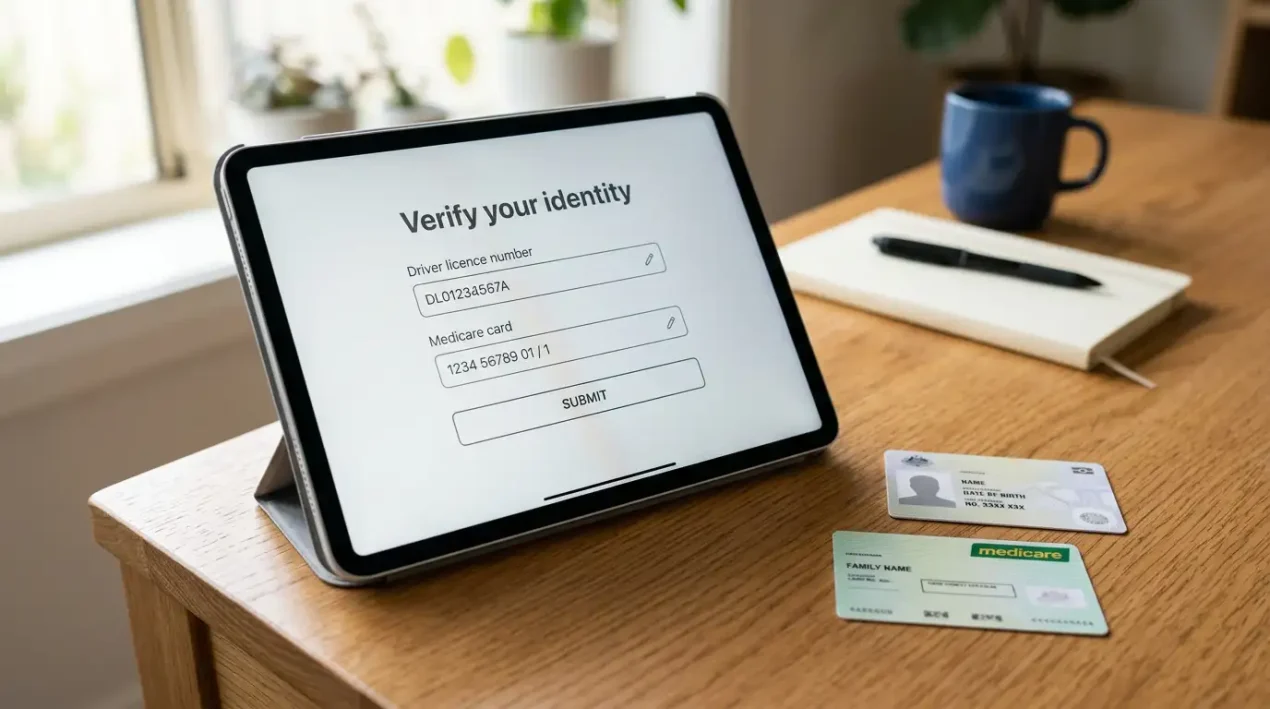
The signup that hits a wall before the first bet
One of the most reliable ways to ruin a punter’s Friday night is to have their account verification stall on a typo. I’ve watched a friend try to deposit AU$200 on a Saturday afternoon, miss out entirely on a race he’d planned a fortnight around, and only realise on Monday that the operator had been sitting on an ACIP discrepancy because his Medicare card showed his middle name and his bookmaker registration didn’t. The deposit screen showed a bland decline, the support queue was eight hours, and the race was long gone.
That kind of mistake used to be retrievable through a quick post-deposit fix. From 29 September 2024 it isn’t, because the rule changed underneath. Operators must now complete the entire customer identification procedure before the account exists at all, which means a typo at signup is a typo that locks you out completely until you fix it. The friction has moved from the back of the funnel to the front, and the punter who doesn’t understand the new shape of the funnel is the one who keeps banging their head against it.
So this piece walks through what KYC and ACIP actually do at an Australian bookmaker, where the new pre-creation rules sit, and how to get through verification cleanly the first time so your Visa deposit lands when you expect it to.
Complete your profile with our guide.
What ACIP actually is
ACIP – Applicable Customer Identification Procedure – is the AUSTRAC-defined verification process that reporting entities have to apply to customers before providing designated services. For wagering operators, ACIP requires confirming the customer’s full name, date of birth, residential address, and verification of those details against authoritative sources. The standard documents are an Australian driver licence plus a Medicare card or passport, though there are alternative paths for customers who don’t have those.
The process used to allow a 14-day grace window – operators could open accounts and start providing services while ACIP was being completed in the background. This created a gap that AUSTRAC and the responsible-gambling sector flagged as exploitable: customers could deposit and lose money before any meaningful identity check had occurred, and bad actors could open temporary accounts with thin verification. The 29 September 2024 amendment closed the gap by mandating that ACIP be complete before account creation.
What this means at a practical level is that you can’t deposit at a bookmaker until you’ve passed verification. The signup flow is now front-loaded with identity checks, and any deposit attempts before verification clears will fail at the operator’s level – sometimes silently, sometimes with a verification prompt, sometimes with a generic decline that masks the real reason.
Why pre-deposit verification trips up Visa users specifically
Visa deposits are particularly sensitive to ACIP completion because they involve a third-party payment chain that needs to align with the verified identity. The bookmaker has to confirm that the cardholder name on your Visa matches the verified name on your bookmaker account before the deposit can clear. Any mismatch – a middle name on one but not the other, a maiden name on one and a married name on the other, a hyphen present on one and absent on the other – can trip the cross-check and stall the deposit.
The mismatch issue is more common than people expect. Driver licences in Australia don’t always carry middle names. Bank-issued Visa cards usually use the name registered on your bank account, which may or may not match the licence. Bookmaker registrations capture whatever you typed in at signup, which may match neither perfectly. Three different names on three different documents, all referring to the same person, all needing to align inside the operator’s verification engine.
Card-payment value in Australia hit AU$1.1 trillion in 2025 with Visa as the dominant scheme – over 52.8% of banking cards globally – so the operational scale of card-name matching is significant. Operators that get this wrong at scale create a customer-experience problem; operators that get it too right (i.e. unnecessarily strict) create false-positive friction. The middle ground requires investment in name-normalisation infrastructure that not every operator has.
What you actually need to clear ACIP cleanly
The most reliable signup combination is an Australian driver licence plus a Medicare card. The two documents cross-reference well, the data is structured, and the operator’s verification provider can usually confirm both within a minute or two. If you have these, use them.
If you don’t have a driver licence, an Australian passport is the next best option. Passports have all the structured data the verification engine needs, but they cost more to verify because the operator’s provider has to query a different government data source. Some smaller operators don’t have passport-verification access and will tell you to provide alternative documents instead, which usually means a much slower manual review.
The fallback paths – utility bills, bank statements, citizenship certificates – work but introduce significant friction. Manual document review can take 24 to 72 hours, and during that time the account is in a verification-pending state where you can sign up but not deposit. If you’re trying to get an account ready for a specific event, plan ahead by at least a few days if you don’t have driver licence and Medicare to hand.
The detail that catches people out is the address. Your verification documents have to show a current Australian residential address, and the address has to match what you typed at signup. Recently moved? Make sure your driver licence is updated before you sign up, because the address on the licence is what the verification engine reads. The bookmaker can’t override a mismatch even if you can prove the address is yours through other means.
The 30-day name-match window for Visa
Once you’ve cleared ACIP, the operator runs a separate check on every payment method you add. For Visa specifically, this includes a name-match between the verified identity and the cardholder name on the card. The cardholder name comes from a small set of data fields the issuer publishes alongside the card token, and the operator’s payments team reads those fields to confirm the name aligns with your account.
If the names don’t match, the deposit gets held for review rather than rejected outright. The hold lasts up to 30 days at most operators, during which time you have to either provide additional documentation showing the cards are yours (a recent bank statement showing the card is the cleanest evidence) or update the name on one side to align with the other. Most cases resolve within 24 to 48 hours of you submitting the right document.
What you can’t do is bypass the check. Some punters try to get around a name-match issue by withdrawing through a different rail, on the assumption that the bookmaker will release funds as long as someone takes them. That doesn’t work – the operator’s compliance framework requires alignment between the verified identity and the funding source on both deposit and withdrawal sides, and a mismatch on either flags the account for review until resolved.
BetStop, the National Self-Exclusion Register, and the verification overlap
One layer I see misunderstood is the relationship between ACIP and BetStop. The two systems are linked but not the same. BetStop is the National Self-Exclusion Register where punters can sign up to be excluded from all licensed Australian wagering operators. As of the end of Q1 of the 2025-26 financial year, BetStop had 49,382 total registrations with 31,838 currently active exclusions, and 4,541 new registrations had come in during that quarter.
When you complete ACIP at a new bookmaker, the operator checks your verified identity against the BetStop register. If you’re on it, the account creation fails – you can’t sign up while you’re self-excluded. This check happens automatically as part of the verification flow, and it uses the same identity data that ACIP collected.
The point of overlap is that ACIP is what makes BetStop work. Without verified identity at every operator, the register couldn’t be enforced consistently – punters could sign up at multiple operators with slightly different details and bypass the exclusion. Pre-creation ACIP closes that loophole and makes BetStop genuinely effective, which is why the responsible-gambling sector pushed hard for the September 2024 rule change.
What to do when verification stalls
If your ACIP check fails or stalls, the first move is to read the operator’s response carefully. Different failure modes need different fixes. A name mismatch needs a corrected document. An address mismatch needs an updated licence or supplementary proof. A document not found or expired error needs a current document. A “manual review pending” message just needs patience.
The 514 enquiries and complaints ACMA received in Q2 2024 about gambling services – 463 of which (90%) were valid for further investigation under the Interactive Gambling Act – give you a sense of the volume of friction in the system. A meaningful share of those complaints involve verification stalls, KYC mismatches, and account-access issues, so the regulator is well aware of the operational reality.
The fastest fix for most stalls is to submit cleaner documentation. Photograph your driver licence in good light, on a contrasting background, with all four corners visible. Make sure the scan or photo is high-resolution. Include any supplementary documents the operator requests in the same submission rather than dripping them in over multiple emails. The verification team’s queue moves faster on complete submissions than on incomplete ones.
Where verification fits in the broader payment-layer picture
ACIP is the bottleneck most punters underestimate. The card mechanics, the credit ban, the surcharge rules – all of those operate on top of a verified identity foundation. If the foundation isn’t solid, none of the rest of it matters. Get ACIP right at signup, keep your documents current, and the friction at the deposit screen drops to a fraction of what it would otherwise be.
Learn about the national BetStop self-exclusion scheme.
For the deeper picture of how the AU$5,000 daily threshold interacts with KYC verification specifically, my piece on the AUSTRAC AU$5,000 daily threshold for Visa bettors covers the threshold mechanics in detail.
Can I deposit with a Visa not registered in my name (parent’s, partner’s)?
No. The operator’s compliance framework requires the cardholder name on the Visa to match the verified identity on your bookmaker account. A card in someone else’s name is treated as a third-party payment and will be rejected, regardless of whether you have permission from the cardholder. The rule applies to both deposits and withdrawals.
What documents does ACIP require for an AU bookmaker signup in 2026?
The standard combination is an Australian driver licence plus a Medicare card or passport. Operators verify these against authoritative government data sources, which usually completes within minutes. Alternative documents – utility bills, bank statements, citizenship certificates – are accepted but trigger manual review and slow the process to 24 to 72 hours.
How long does pre-creation verification typically take?
With clean documentation (driver licence and Medicare), most operators complete ACIP in under five minutes. Edge cases involving recent address changes, name discrepancies, or documents that don’t cross-reference cleanly can stretch to 24 hours or more. The pre-creation rule means you can’t deposit until verification is fully complete, so plan ahead for events you’ve earmarked.
